
How to Sell Your House Fast in California Without Cutting Corners
Selling quickly in California does not have to mean accepting less. With the right preparation, pricing strategy, and local expertise, you can move your home efficiently while protecting your bottom line. Here is what actually works in today's Southern California market.
What actually speeds up a sale
Speed in real estate is rarely about luck. Across Inland Empire real estate markets like Riverside and Rancho Cucamonga, and in competitive pockets of West Los Angeles, the homes that close fast share a few common traits. Sellers who move quickly are the ones who controlled what they could before the listing ever went live.
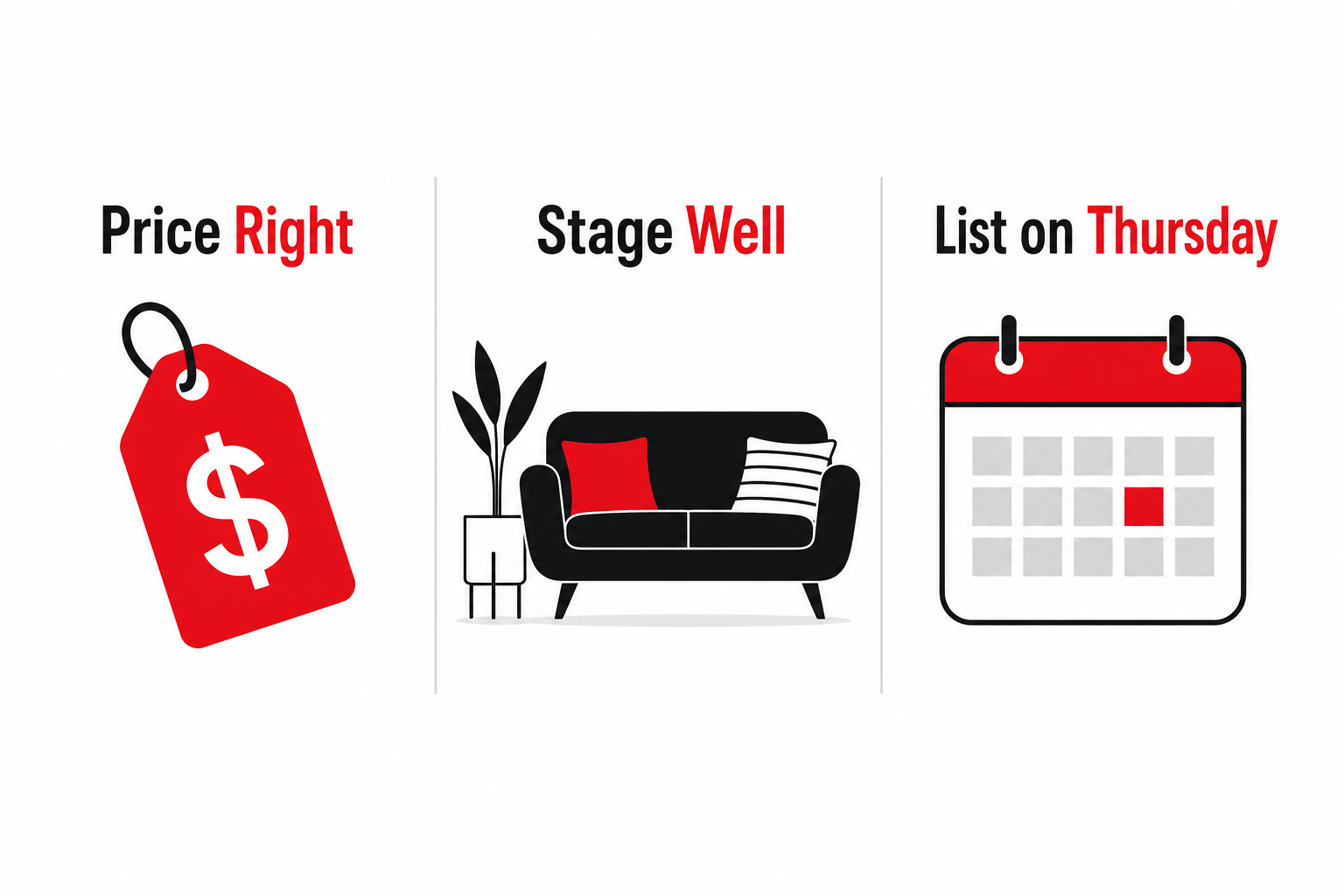
Price it right from day one
The single most powerful tool a seller has is the initial list price. California homes are currently selling at a sales-price-to-list-price ratio of 100%, according to the California Association of Realtors. That means well-priced homes are not leaving money on the table; they are generating the competitive interest that drives strong offers.
Overpricing is the fastest way to stall a sale. Buyers and their agents quickly identify homes that are priced above comparable sales, and those listings accumulate days on market. Once a property sits, buyers start wondering what is wrong with it, even when the only issue is the number on the sign. A sharp comparative market analysis done before you list, not after you get your first low offer, keeps you ahead of that dynamic.
Stage and photograph strategically
Buyers in Southern California are shopping online before they ever request a showing. Professional photography is not optional; it is table stakes. But staging is what actually converts a click into a walkthrough and a walkthrough into an offer.
Effective home staging does not require a full renovation. Decluttering, neutralizing bold paint colors, improving curb appeal, and placing furniture to highlight square footage are all high-return moves that cost relatively little. According to the National Association of Realtors, staged homes sell faster and often for more than unstaged counterparts.
For Riverside sellers and those listing in the Inland Empire, outdoor living areas and natural light are major buyer priorities. Highlighting a backyard, a covered patio, or even a clean garage adds real perceived value in this region.
Time your listing intentionally
Spring remains the strongest selling window in California. Listing between March and June gives sellers more buyer traffic, faster timelines, and stronger premium potential. April in particular sees homes selling roughly nine days faster than the annual average, based on C.A.R. seasonal data.
That said, motivated buyers exist year-round in markets like Riverside and West LA. If your circumstances do not align with spring, do not wait for the perfect window. A well-priced, well-presented home will find a buyer in any season. What you want to avoid is listing during a holiday week or immediately following a market news event that creates buyer hesitancy.
Listing on a Thursday afternoon is consistently cited by agents as a strong tactical move. It places your home at the top of buyer searches just as people are planning weekend tours, maximizing early open-house traffic.
Work with an agent who knows your specific market
Local expertise is not a marketing phrase. It is a pricing advantage. An agent with genuine neighborhood-level knowledge understands which street commands a premium, which school boundary affects buyer demand, and when a comparable sale is genuinely comparable versus misleading.
Super Woman Super Realtors brings hands-on coverage across Riverside, the Inland Empire, and West Los Angeles. That kind of market familiarity directly affects how your home is positioned, how it is shown, and how quickly offers arrive.
Where sellers lose time
Most sale delays are preventable. Understanding the common friction points before you list puts you in a stronger position to move quickly without surprises.
Deferred maintenance and undisclosed issues
California has some of the most detailed disclosure requirements of any state. The California Department of Real Estate mandates that sellers disclose known material defects, and buyers almost always order a professional inspection. When an inspection reveals deferred maintenance that was not disclosed or accounted for in the price, deals fall apart or renegotiate substantially.
A pre-listing inspection is one of the smartest investments a motivated seller can make. It surfaces issues on your timeline, not the buyer's, giving you the choice to repair, price accordingly, or offer a credit. That transparency builds buyer trust and removes one of the most common reasons escrow drags out or collapses.
Financing contingencies and buyer qualifications
One of the biggest timeline risks in any California transaction is the buyer's financing. A buyer who is not fully pre-approved, or whose lender has not reviewed their file closely, can delay escrow by weeks or even cause a deal to fall through entirely.
According to current market data, approximately 26% of California home purchases involve all-cash buyers, a figure that has been climbing in recent years. Cash offers remove the financing contingency entirely, compressing a typical 45-to-90-day timeline down to two weeks or less. If you receive both a financed offer and a cash offer at similar price points, the cash offer almost always represents lower risk even if the number is modestly lower.
For sellers who prefer a financed buyer, require full pre-approval documentation (not just a pre-qualification letter) before accepting an offer. Your agent can help you evaluate the strength of the buyer's financial position as part of the offer review process.
Poor communication and delayed decisions
Speed requires responsiveness. Sellers who take multiple days to respond to offers, counter-offers, or repair requests put momentum at risk. Buyers who are actively shopping do not wait; they move to the next property. A 24-hour response window is a reasonable and protective standard during active negotiation.
Ignoring the first weekend
The first weekend a home is on the market is the highest-traffic moment of the entire listing. Buyer urgency peaks in those first days, and that is when you are most likely to receive multiple competing offers. Sellers who are not ready for showings, who have not completed their prep work, or who set limited showing hours dramatically reduce their chances of generating early competition.
How to keep the process realistic
Selling fast is a reasonable goal. Selling fast without cutting corners requires honest expectations and a clear plan. The two are not in conflict; they actually reinforce each other.
Understand the current California timeline
In the current market, the median time to sell a California single-family home sits around 21 to 37 days from listing to accepted offer, depending on the season and submarket. Once under contract, escrow typically runs 30 to 45 days. That means a realistic total timeline, even for a well-prepared seller, is roughly 60 to 80 days from listing to closing.
According to Redfin's March 2026 housing data, the California median home price reached $854,000 with homes averaging 37 days on market. For Inland Empire and Riverside sellers specifically, that timeline can vary based on price point, condition, and local inventory levels.
Expecting to close in seven days with a financed buyer is not realistic. Expecting to close in 60 days with strong preparation, correct pricing, and a capable agent absolutely is.
Understand your closing cost obligations
Speed surprises sellers most often when it comes to costs. California sellers typically pay 2% to 3% of the purchase price in closing costs, including transfer taxes, escrow fees, and pro-rated property taxes. Commission costs add on top of that. Going in without a clear picture of your net proceeds causes hesitation when offers arrive, which slows everything down.
Cost Category -- Typical Seller Range Transfer taxes: 0.11% to 0.55% of sale price (varies by county/city) Escrow and title fees: $1,500 to $3,500 Pro-rated property taxes: Varies by closing date Seller closing costs total: Approximately 2% to 3% of sale price
Balance speed with protection
Selling fast should never mean skipping the steps that protect your legal and financial position. California disclosure requirements, escrow procedures, and title review exist for a reason. Rushing past them creates liability and, ironically, often slows things down further when issues surface later in the process.
The sellers who genuinely close fast are those who complete their preparation front-loaded before listing, price correctly from the start, and maintain clear communication throughout escrow. That is a process, not a shortcut.
Get your equity picture clear before you decide
One of the most grounding steps a seller can take before listing is simply knowing what they have. Use the home value estimator to get a realistic starting point for your equity position. Combine that with a conversation with Vicki Galvan about current comparable sales in your specific neighborhood, and you will have the clarity to move with purpose instead of anxiety.
Selling in Southern California right now is absolutely achievable on a reasonable timeline. The sellers who do it well are simply the ones who show up prepared.
Frequently Asked Questions
How long does it typically take to sell a house in California? In the current market, California homes take a median of 21 to 37 days to receive an offer, plus 30 to 45 days in escrow, for a total of roughly 60 to 80 days.
Does staging actually help sell a home faster in Southern California? Yes. Staged homes generate more online interest and showing requests. In a competitive market, presentation directly affects how quickly offers arrive.
What is the biggest reason California home sales fall through? Buyer financing issues are the most common cause. Requiring full pre-approval and reviewing the buyer's financial documentation carefully reduces this risk significantly.
Is spring really the best time to sell a home in California? Spring, particularly March through May, brings the most buyer activity and faster timelines. April listings sell roughly nine days faster than the annual average based on C.A.R. data.
How do I find out what my home is worth before listing? Start with an online valuation tool to establish a baseline, then work with a local agent for a precise comparative market analysis using recent neighborhood sales.
Ready to Make a Move?
Talk to Vicki Galvan
Whether you are buying, selling, or just exploring your options -- Vicki is here to guide you every step of the way.